There is something quietly radical about walking into a local art event. You are not flying to a capital city. You are not standing in a queue outside a famous institution with a million other tourists. You are standing in your own community, looking at work made by people who breathe the same air, navigate the same streets, and feel the same particular weight of living in this specific place at this specific time. Local art events are easy to overlook. They do not always come with prestige or publicity. They do not always have velvet ropes or glossy catalogues. But they carry something that the world’s most famous galleries frequently cannot offer, which is authenticity, access, and the rare feeling of being genuinely present in a living cultural moment. This blog makes the case for why attending local art events is one of the most rewarding decisions you can make, whether you are an artist, a collector, a student, or simply a human being who wants a richer experience of the world.
Defining Local Art Events Beyond the Obvious
When most people hear the phrase “local art events,” they picture an opening reception at a small gallery with cheap wine and artists hovering nervously near their work. That image is real, and there is nothing wrong with it. But local art events are a category far broader and more varied than any single stereotype can capture. Understanding the full landscape of what these events include is the first step toward appreciating how much they offer.
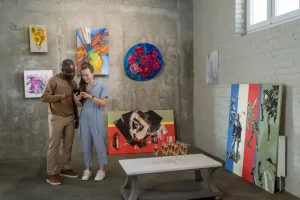
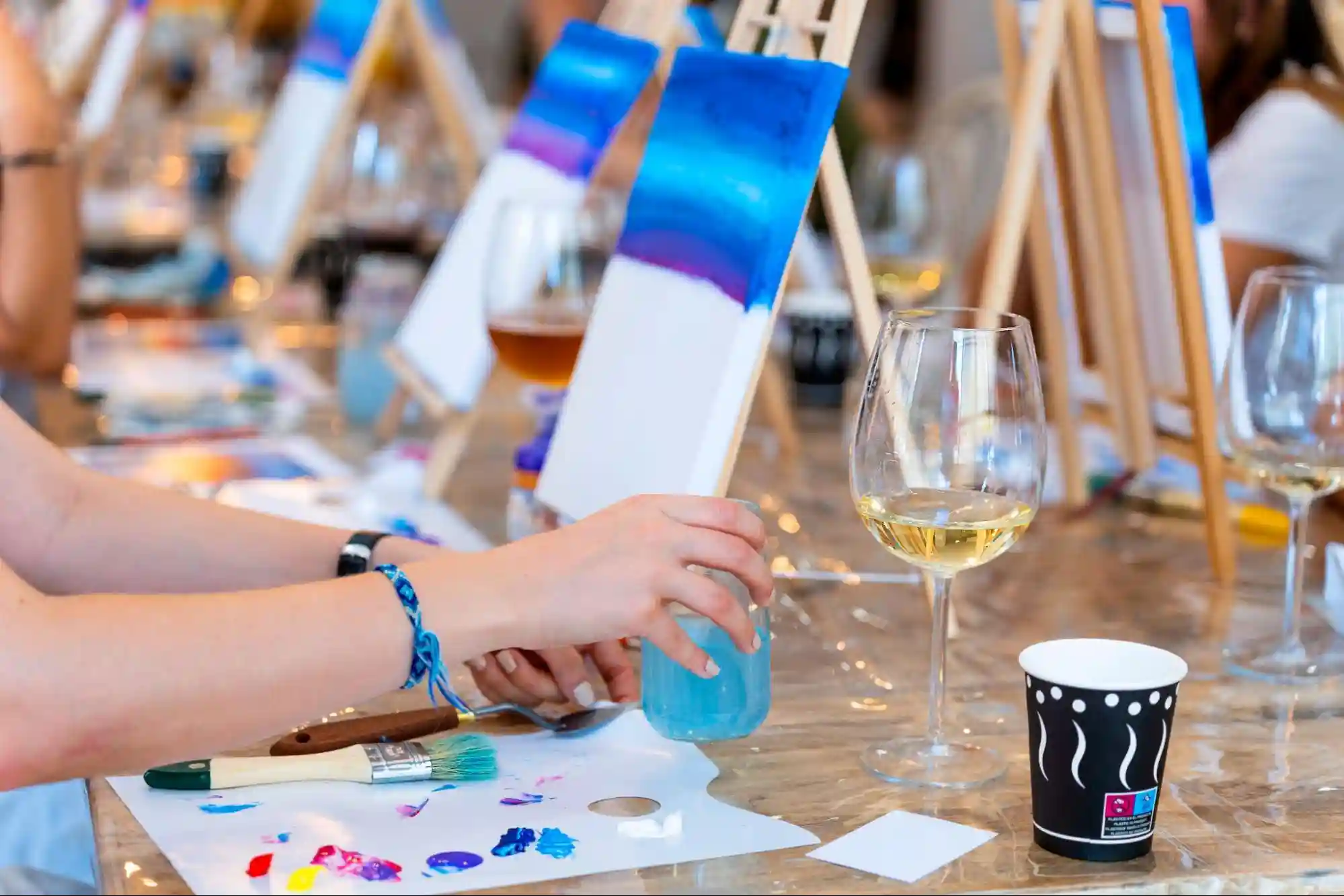
Local art events encompass open studio tours, where working artists invite the public into their actual creative spaces. They include community mural unveilings, public sculpture installations, outdoor art fairs, artist talks and panel discussions, poetry and spoken word evenings, printmaking workshops, life drawing sessions, ceramic markets, zine fairs, and collaborative public art projects that unfold over weeks or months. They include film screenings organized by local arts collectives, textile exhibitions in community centers, photography shows in coffee shops, and sound art installations in parks. The range is genuinely enormous, and different types of events offer dramatically different experiences and benefits.
The Cultural Infrastructure Hidden in Plain Sight
How Local Events Build a Community’s Creative Identity
Every city, town, and neighborhood with a thriving local arts scene has built that scene through the accumulation of events. Not through a single landmark institution or a famous resident artist, but through the consistent, repeated gathering of people around creative work over time. Local art events are the connective tissue of cultural life. They are where the community develops its aesthetic identity, where shared references and conversations are built, and where the particular creative voice of a place begins to emerge and consolidate.
This matters more than it might initially seem. Research in cultural sociology consistently shows that communities with active local arts ecosystems have stronger social cohesion, lower rates of social isolation, and higher levels of civic participation than comparable communities without them. The art is not incidental to these outcomes. The gathering around art is what produces them. When people repeatedly show up in the same spaces to look at and discuss creative work, they build the kind of weak social ties that sociologist Mark Granovetter famously identified as crucial to community resilience. These are not the deep bonds of close friendship but the broad networks of familiar faces and shared references that make a community feel like a community rather than just a collection of individuals sharing a zip code.
The Economic Argument Nobody Mentions at Openings
Local art events have a measurable economic impact that extends well beyond the sale of artwork. Every person who attends an opening, a fair, or a public art event is a person who parked their car nearby, perhaps ate dinner at a local restaurant before or after, bought a coffee, visited a neighboring shop. The aggregated economic activity generated by a consistent local arts calendar is significant, and the research on creative economy districts confirms this consistently.
Beyond direct spending, local art events build the kind of cultural reputation that attracts residents, businesses, and visitors who value creative environments. Neighborhoods known for active arts scenes experience higher property values, stronger independent business survival rates, and greater appeal to the creative professionals and knowledge workers that modern economies increasingly depend upon. Attending a local art event is, in a small but real sense, an act of economic investment in the place where you live.
What You Actually Gain From Attending Local Art Events
Seeing Art Before the World Does
This is one of the most genuinely exciting aspects of local art event attendance, and it is one that most people never consider. The artists showing work at local events today include the artists who will be showing at major national and international institutions in ten or twenty years. The trajectory of nearly every significant artistic career passes through local venues before it reaches global ones. Attending local events with regularity means you are seeing emerging work before it carries the institutional weight and market premium that fame attaches to it.
This has both cultural and practical dimensions. Culturally, there is a particular quality of encounter available with work that has not yet been mediated by critical consensus or market validation. You are responding to the work itself rather than to its reputation. Your response is genuinely yours rather than shaped by a received narrative about what the work means and why it matters. Practically, for collectors or aspiring collectors, local art events provide access to work at prices that become unimaginable once an artist’s career accelerates. Building a collection at the local level is one of the most financially intelligent things a collector can do, provided they are paying genuine aesthetic attention rather than simply gambling on which artists will become famous.
The Learning That Happens Outside Classrooms
Art education does not only happen in schools and universities. Some of the most formative learning available about art, creativity, aesthetics, and cultural history happens in the informal spaces of local art events. When you attend an artist talk at a local gallery, you are receiving direct, unfiltered access to a creative mind explaining its own process, influences, and intentions. This is qualitatively different from reading about an artist in a textbook or watching a documentary about their work.
The questions asked by audience members at local artist talks are often more searching and specific than anything produced by professional critics, precisely because they come from genuine curiosity rather than professional positioning. The conversations that happen in the margins of local events, before the talk begins, during the opening, in the courtyard afterward, are where ideas genuinely circulate and develop. Many artists cite informal conversations at local events as among the most intellectually formative experiences of their creative lives. Attending these events means being present in that informal academy rather than always learning about it second-hand.
Building Relationships That Last
The relationships available at local art events are fundamentally different from those available through professional networking events or social media connections. They are built around a shared experience of specific creative work in a specific place and time. That shared reference becomes a foundation for ongoing relationship in a way that a business card exchange simply cannot replicate.
For artists, the relationships built at local events include connections with other artists working in adjacent but different disciplines, which frequently produces collaborative projects that neither artist would have conceived independently. They include connections with gallery directors, curators, critics, and collectors who are genuinely open to engagement at local events in ways they are often not at larger, more formal occasions. They include connections with community members who become advocates, patrons, and champions for an artist’s work over the long term.
Local Art Events and Personal Growth
How Regular Attendance Sharpens Your Perception
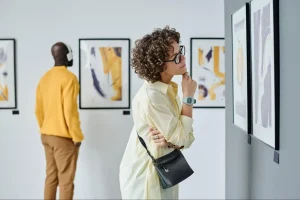
There is a cognitive benefit to regular art viewing that neuroscience has begun to document in detail. Looking at art carefully and consistently trains the visual cortex to notice more, process more, and retain more of the visual information that constitutes our daily experience of the world. Researchers at the University of Arkansas found that students who visited art museums showed significant improvements in critical thinking, empathy, and tolerance for ambiguity compared to control groups. These benefits did not require visits to famous museums. They required engaged encounters with art in any setting.
Regular attendance at local art events produces this perceptual training in a particularly effective way because the work you encounter is varied, unexpected, and not pre-filtered by institutional prestige. You are doing the evaluative work yourself rather than arriving with the assurance that what you are looking at is important. This active evaluation builds exactly the kind of critical perceptual capacity that the Arkansas research identified. Over time, people who attend local art events regularly report noticing more detail in their everyday environment, feeling more responsive to beauty in ordinary contexts, and experiencing a heightened sense of the visual richness of the world they move through daily.
Finding Meaning in an Overstimulated World
We live in an era of overwhelming sensory input and perpetual distraction. The attention economy competes aggressively for every moment of cognitive engagement you have. Against this backdrop, the experience of standing quietly in front of a piece of art, giving it your full attention for several minutes, is not just aesthetically pleasurable. It is a form of resistance and restoration.
Local art events provide structured opportunities for exactly this kind of focused, present attention. They create contexts where it is socially normal to slow down, to look carefully, to sit with uncertainty, to let a work affect you without immediately reaching for your phone to document or share the experience. This quality of attention is not just good for your relationship with art. It is good for your mind. Attention researchers including Gloria Mark at the University of California have documented the psychological restoration that comes from periods of focused, non-digital engagement with aesthetic experience. Local art events deliver this restoration in a social context, which multiplies its benefits.
How Artists Benefit From Attending Other Artists’ Events
The Generous Economy of Showing Up
There is an ethic in healthy artistic communities that is sometimes called the generous economy of attendance. Artists show up for each other’s events. They do this not merely out of social obligation but because they understand that the strength of the local arts ecosystem is a shared resource that everyone benefits from building and everyone suffers from neglecting. When artists attend each other’s openings, talks, and performances, they contribute to the visibility and perceived importance of those events. A well-attended opening signals to galleries, critics, collectors, and press that this artist and this community have a genuine constituency.
This reciprocity builds the kind of collective cultural momentum that lifts all boats. A neighborhood with a reputation for vibrant arts events attracts more gallery openings, more public art investment, more media coverage, and ultimately more opportunities for every artist working within it. The individual act of attending a fellow artist’s event is simultaneously a gesture of personal support and an investment in shared infrastructure.
Cross-Disciplinary Inspiration and Unexpected Collaboration
Artists who attend local events across disciplines regularly report that their most significant creative breakthroughs have come from encounters with work in fields adjacent to their own. A novelist who attends a local ceramics exhibition and is struck by the relationship between texture and time in handmade objects brings that sensitivity back to their prose. A painter who attends a spoken word event and is moved by the compression of meaning in a single phrase begins to think differently about negative space on canvas.
These cross-disciplinary encounters are most available at the local level because local arts communities are small enough that all disciplines occupy overlapping spaces. In a major city, the painting world and the dance world and the music world can exist in almost complete isolation from each other, each with its own institutions, publications, and social networks. In a local community, the same people frequently attend the opening, the performance, and the reading. That forced adjacency is creatively generative in ways that specialized, discipline-specific environments rarely replicate.
Final Thought
Local art events will not always change your life in a single evening. But they will change it, incrementally, persistently, and sometimes in ways you only recognize in retrospect. You will find yourself noticing things you used to walk past. You will find yourself in conversations you never expected to have with people you never expected to meet. You will find yourself caring about a place and a community in a way that feels earned rather than inherited. The art hanging on the wall of a local gallery or chalked onto a neighborhood sidewalk or performed in a community hall is not lesser art because it is local. It is the art that belongs to your world. Showing up for it is, in the most genuine sense, showing up for yourself.